Searching for an OEM outerwear manufacturer in China quickly turns up thousands of names: factories, trading companies, sourcing agents and marketplace sellers that all describe themselves as an “apparel export company.” For a brand in Europe or the US, the hard part is not finding a supplier. It is finding one that can make your jackets to your specification, pass your market’s requirements, and ship on time, season after season.
This guide explains how to tell the options apart, what real export experience looks like, how the apparel production process in China works from tech pack to shipment, and which questions to ask before you place a sample order. It is based on how we work at ZHENJIANG YURONG IMP&EXP CO LTD, an OEM/ODM manufacturer of apparel, outerwear, baby products and pet products in Zhenjiang, Jiangsu.
Apparel export company, factory or sourcing agent: what is the difference?
“Garment exporter” in China can mean very different businesses. Knowing which one you are talking to explains most differences in price, communication and quality control.
| Type of supplier | What they do | Strengths | Watch out for |
|---|---|---|---|
| Trading company | Takes your order and places it with one or more factories | Wide product range, English-speaking sales | Less control over production; quality depends on factories you never see |
| Factory without export team | Produces for domestic brands or for traders | Lower price on simple styles | Limited English, little experience with EU/US sizing, labelling and testing |
| Factory with its own export team | Develops, produces and exports directly | Direct communication with production, faster changes, clear responsibility | Fewer product categories than a large trader |
| Sourcing agent | Finds and manages suppliers for a fee | Useful for many unrelated categories | Adds a layer of cost and communication |
For technical products like outerwear, where seam taping, filling weight and waterproof coatings matter, a factory with its own export team is usually the most reliable choice: the people who answer your emails can walk onto the production floor.
What “export experience” really means for a fashion garment exporter
Almost every Chinese clothing manufacturer claims export experience. The useful question is experience with what? For brands in Europe and the US it should include:
- Market sizing. Grading to EU and US size charts, including children’s sizes, rather than adapting domestic blocks.
- Labelling and documentation. Care labels, fibre composition, country of origin and the documents your importer needs.
- Testing and compliance. Familiarity with requirements such as OEKO-TEX, colour fastness, and children’s safety standards like EN 71, EN 1130 or EN 14682 for babywear and kidswear.
- Packing for export. Folding, polybags, carton marks and size/colour assortments that match your warehouse.
- Repeat business. Long-term customers who reorder are the best evidence that the factory delivers consistently.
YuRong has more than 15 years of export experience serving brands in Europe and the US, including kidswear and outerwear labels. Some of the brands we have worked with are shown on our home page.
Why outerwear needs a specialised OEM apparel factory
A hoodie and a waterproof down jacket are both “apparel,” but they are very different to produce. When you evaluate a China outerwear manufacturer, check experience with:
- Waterproof and seam-taped jackets. High-frequency or hot-air seam taping, waterproof zips and laminated or coated shell fabrics. A single untaped seam defeats the purpose of the garment.
- Down and padded jackets. Accurate fill weights per panel, down-proof fabrics, stitch-through or box-wall construction, and keeping down from leaking at the seams.
- Mixed-material outerwear. Wool sleeves on down jackets, quilted vests, long quilted coats and equestrian-style outerwear all need careful pattern work and matching trims.
- Kids’ outerwear. Safety-checked snaps and zips, no hazardous cords, and durable construction for active wear.
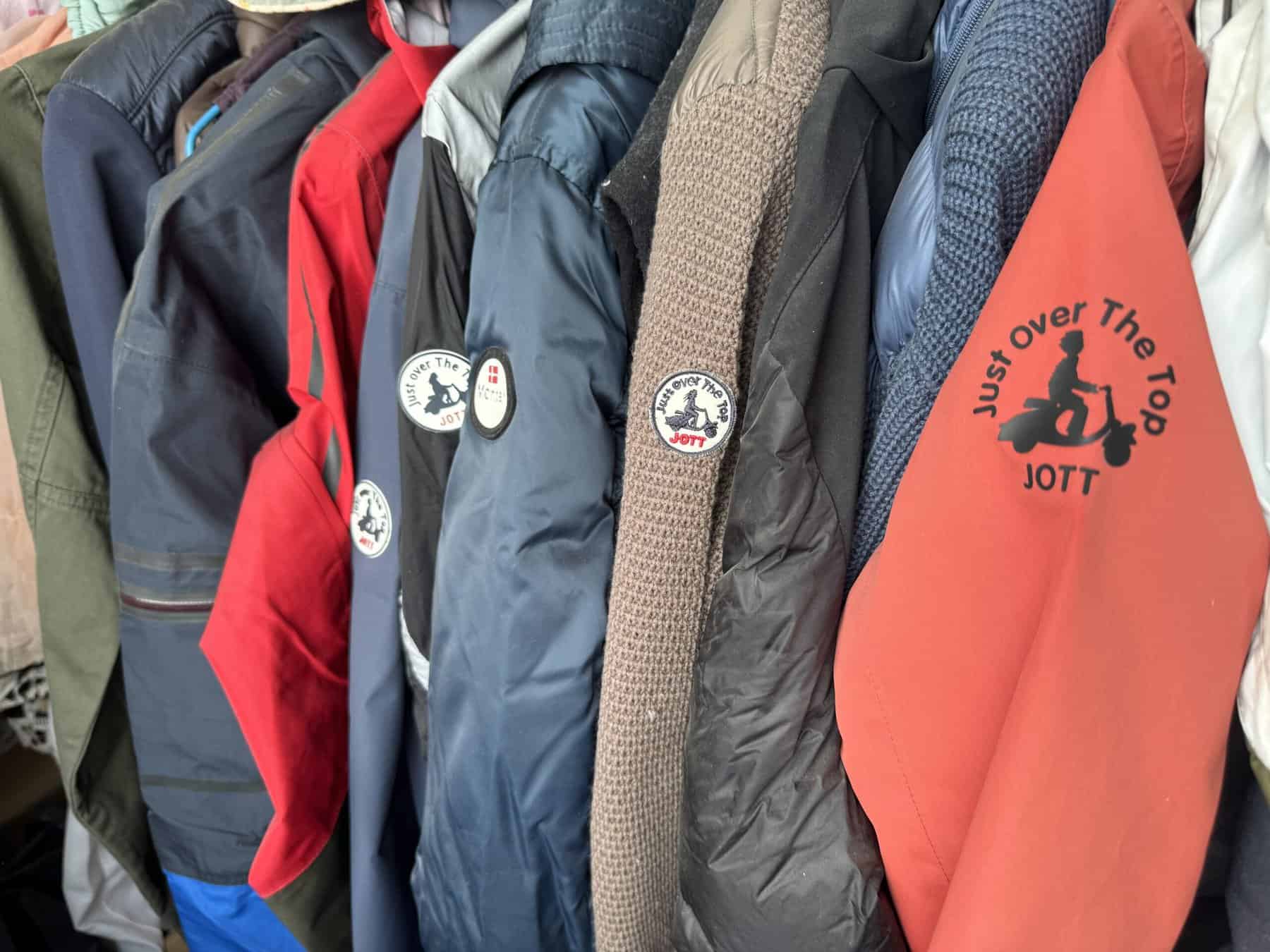
These are the products we make every season, from seam-taped raincoats for kids to wool-sleeve down jackets and quilted vests. You can see examples in our outerwear gallery.
The apparel production process in China, step by step
A good OEM partner follows a clear, documented process. Here is what the apparel production process in China typically looks like for an outerwear order:
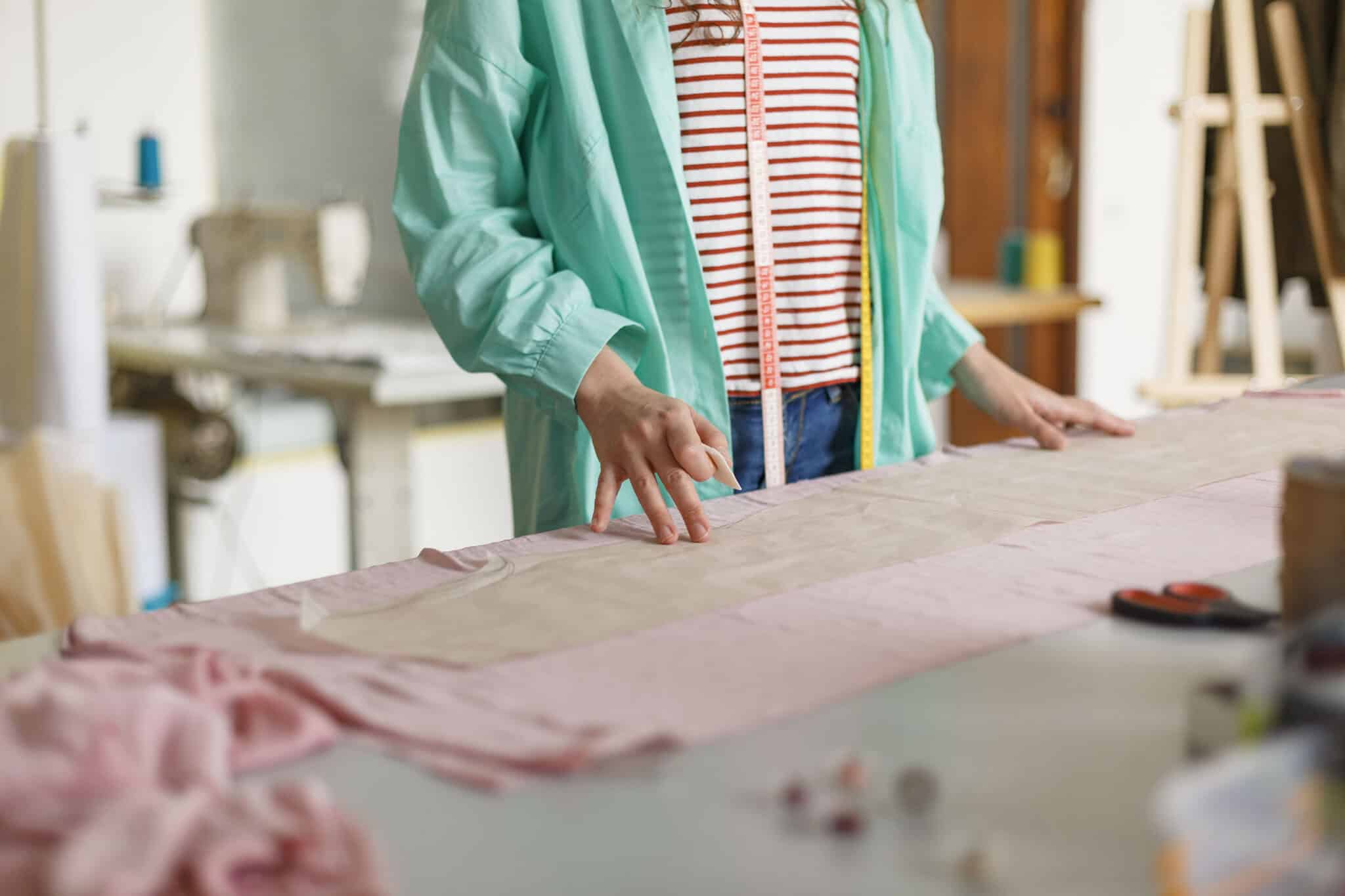
- Brief and tech pack. You share sketches, a tech pack or a reference garment, plus your target price, quantities and delivery date. If you don’t have a tech pack, the factory’s team can create technical drawings for you. See our garment development process.
- Fabric and trim sourcing. Shell, lining, insulation, zips, snaps and labels are proposed and approved, including lab dips for colour.
- Sampling. Proto, fit and pre-production samples are made and adjusted. Typical sample lead time is 3–7 days once materials are confirmed; technical outerwear may need longer. Read more about apparel sampling stages.
- Bulk material check. Fabrics and trims are inspected for colour, shrinkage, colour fastness and strength before cutting.
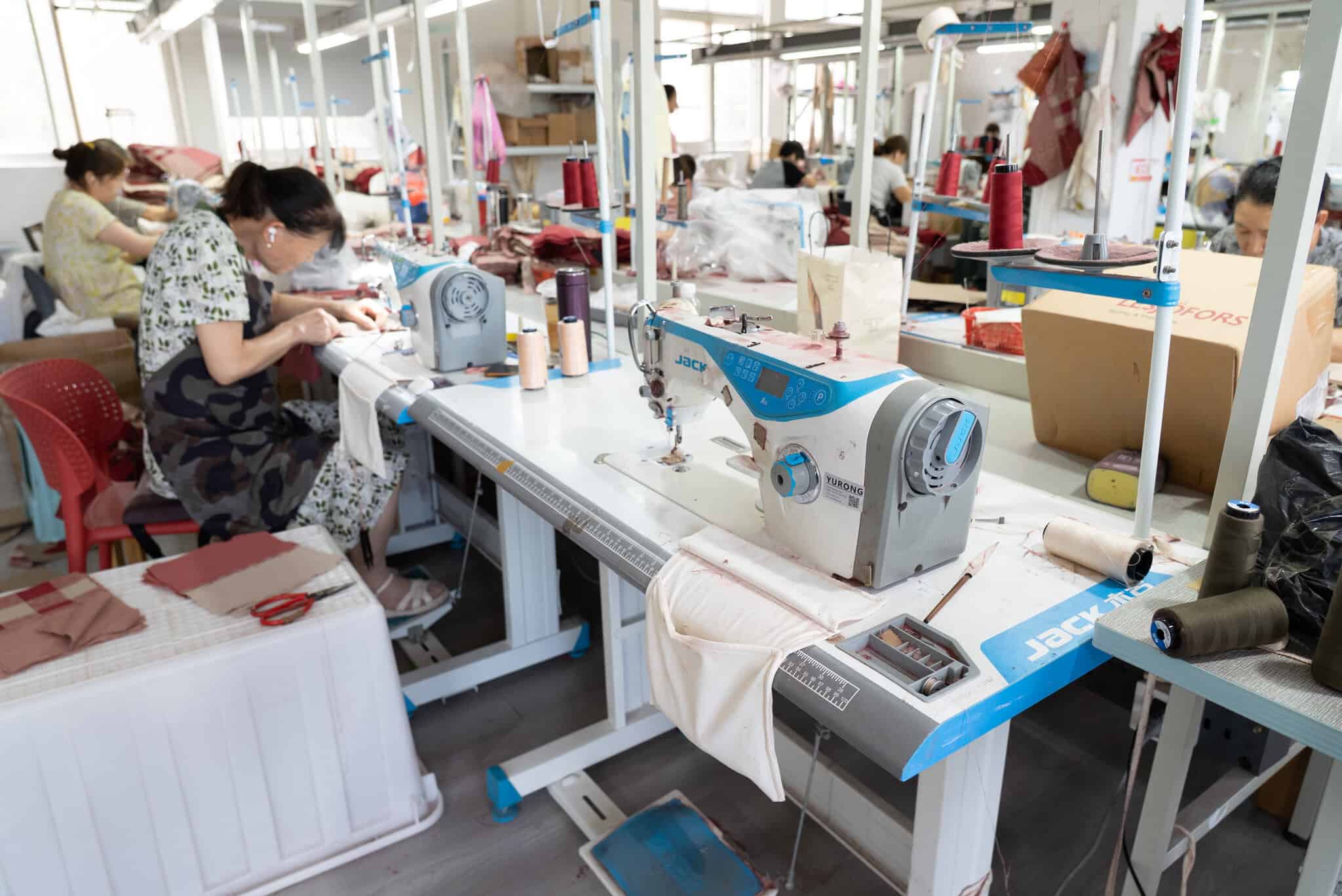
- Cutting, sewing and assembly. Patterns are graded, fabric is cut and bundled by size and colour, and garments move through the sewing lines with inline quality checks.
- Finishing and final QC. Garments are pressed and inspected using AQL sampling. We apply AQL 2.5 for major defects. Learn how AQL inspection works.
- Packing and shipping. Goods are packed to your requirements, with an optional pre-shipment inspection by your own inspector or a third party.
For a typical order, bulk production takes around 30–45 days after the pre-production sample is approved, depending on quantity and complexity.
Clothing manufacturers in China: how to find the right factory
Use this checklist when you shortlist an OEM apparel factory in China:
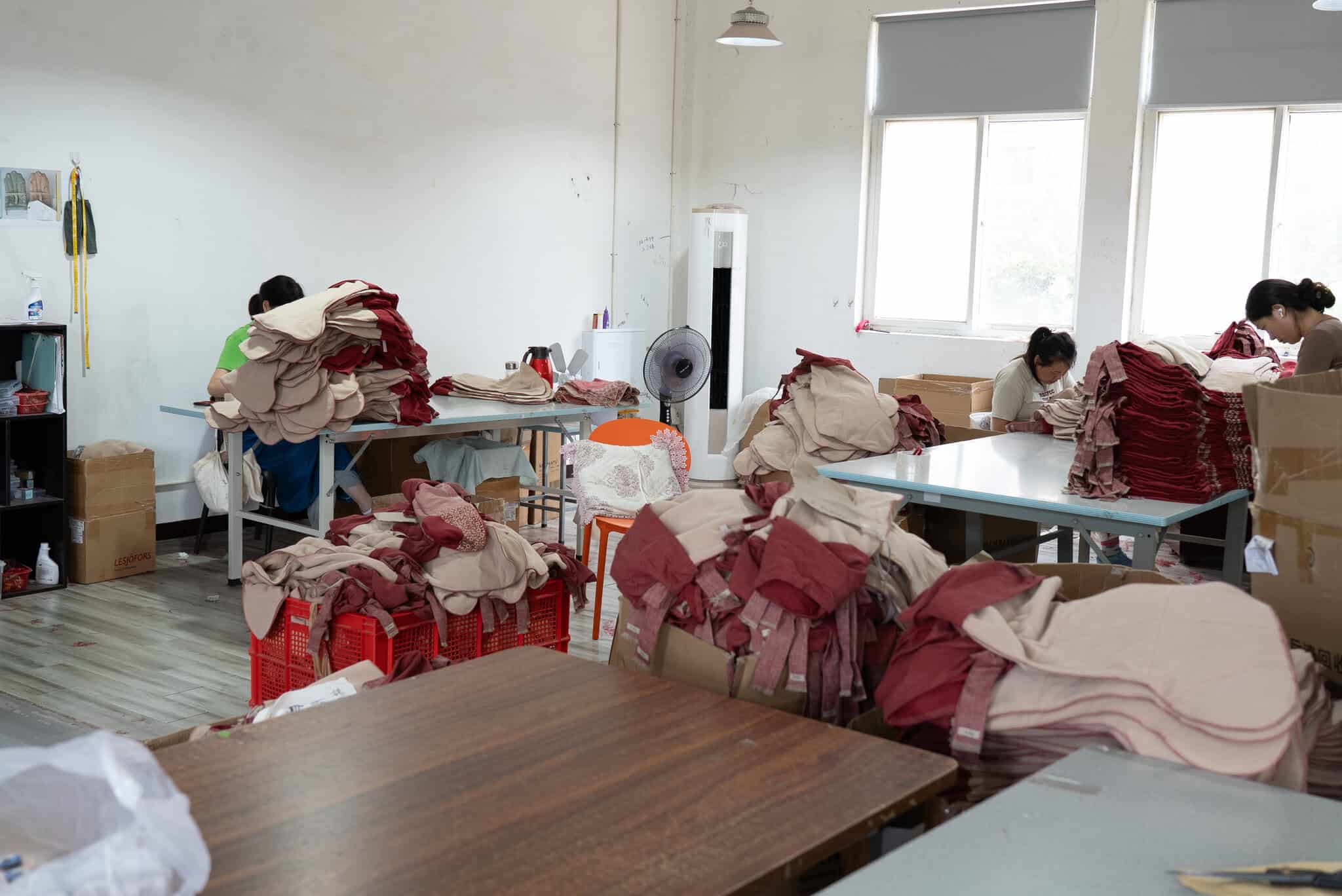
- Ask what they actually produce in-house. Request photos or a video call of the cutting, sewing and inspection areas.
- Request similar products. Ask for samples or photos of garments close to yours: seam-taped jackets, down jackets, kidswear.
- Check communication speed. Clear answers within 24 hours during development are a good sign for the whole order.
- Clarify MOQs. Many factories start at around 500 pieces per style; ask about flexibility for first orders and colour splits.
- Agree on quality standards in writing. Measurement tolerances, AQL levels and how defects are handled.
- Confirm compliance support. Testing reports, OEKO-TEX certified materials, labelling for your market.
- Start with a sample order. It is the best low-risk way to test quality, communication and timing.
For more detail on due diligence, read How to Source a Reliable Apparel Factory in China.
Why brands work with YuRong
- 15+ years of export experience with brands in Europe and the US
- Our own factory in Zhenjiang with a skilled team of 50+ workers
- Outerwear expertise: waterproof seam-taped jackets, down jackets, quilted vests and coats
- Wider range when you need it: knitwear, sweatshirts, baby products and pet apparel
- Fast sampling and a clear process from tech pack to shipment
- AQL 2.5 quality control with inline and final inspection
FAQ
Which Chinese uniform manufacturers have export experience?
Many Chinese factories produce uniforms and workwear, but only some regularly export to Europe and the US. Look for a manufacturer that can show export references, works with your market’s size charts and labelling rules, offers material testing reports, and has a stable production team for repeat orders. Uniform programmes in particular depend on consistent colour and sizing across reorders. Ask how the factory keeps approved samples and records between orders.
What is the difference between an apparel export company and an OEM factory?
An apparel export company may be a trader that outsources production, or a factory that exports directly. An OEM factory produces garments to your design and specification under your brand. The best combination is an OEM factory with its own export team, so you get direct communication with production.
What is the minimum order for OEM outerwear in China?
It depends on the style and materials. Our typical MOQ is 500 pieces per style, and we can discuss smaller first orders. Custom-dyed fabrics or special trims may have their own minimums.
How long does outerwear production take?
Sampling usually takes 3–7 days once materials are confirmed (longer for complex technical jackets). Bulk production typically takes 30–45 days after pre-production sample approval.
Start your outerwear project
Looking for an OEM outerwear manufacturer in China with real export experience? Send us your tech pack, sketches or a reference garment. Contact us and we typically reply within 24 hours.