“We inspect to AQL 2.5” appears on almost every Chinese apparel factory’s website — including ours. But many buyers, especially those placing their first order in China, are not sure what it means in practice, how many pieces are actually checked, or where quality control should start. This guide explains how garment quality control works at ZHENJIANG YURONG IMP&EXP CO LTD, and what you should agree with any factory before bulk production begins.
Quality control starts before the first cut
Most quality problems in a finished garment are created long before the final inspection: an unclear tech pack, an unapproved fabric lot, or a pattern that was never fit-tested. That is why our QC process has four stages, not one:
- Fabric & trim inspection when materials arrive
- Pre-production checks against the approved sample
- Inline quality control on the sewing lines
- Final inspection using AQL sampling, followed by optional third-party pre-shipment inspection
1. Fabric and trim inspection
Bulk fabrics, linings, zippers, buttons and labels are checked before they reach the cutting table. Typical checks include:
- Colour — the bulk dye lot compared with the approved lab dip or swatch, under the same light source
- Colour fastness to washing and rubbing
- Shrinkage after washing, so the pattern can be adjusted if needed
- Strength and visual defects such as holes, slubs, shading or printing faults
- Trims — zipper function, snap and button pull strength, label content and spelling
Finding a shading problem in a roll of fabric costs minutes. Finding it in 3,000 finished hoodies costs the whole order. You can read more about how we source materials on our apparel manufacturing page.
2. Pre-production checks
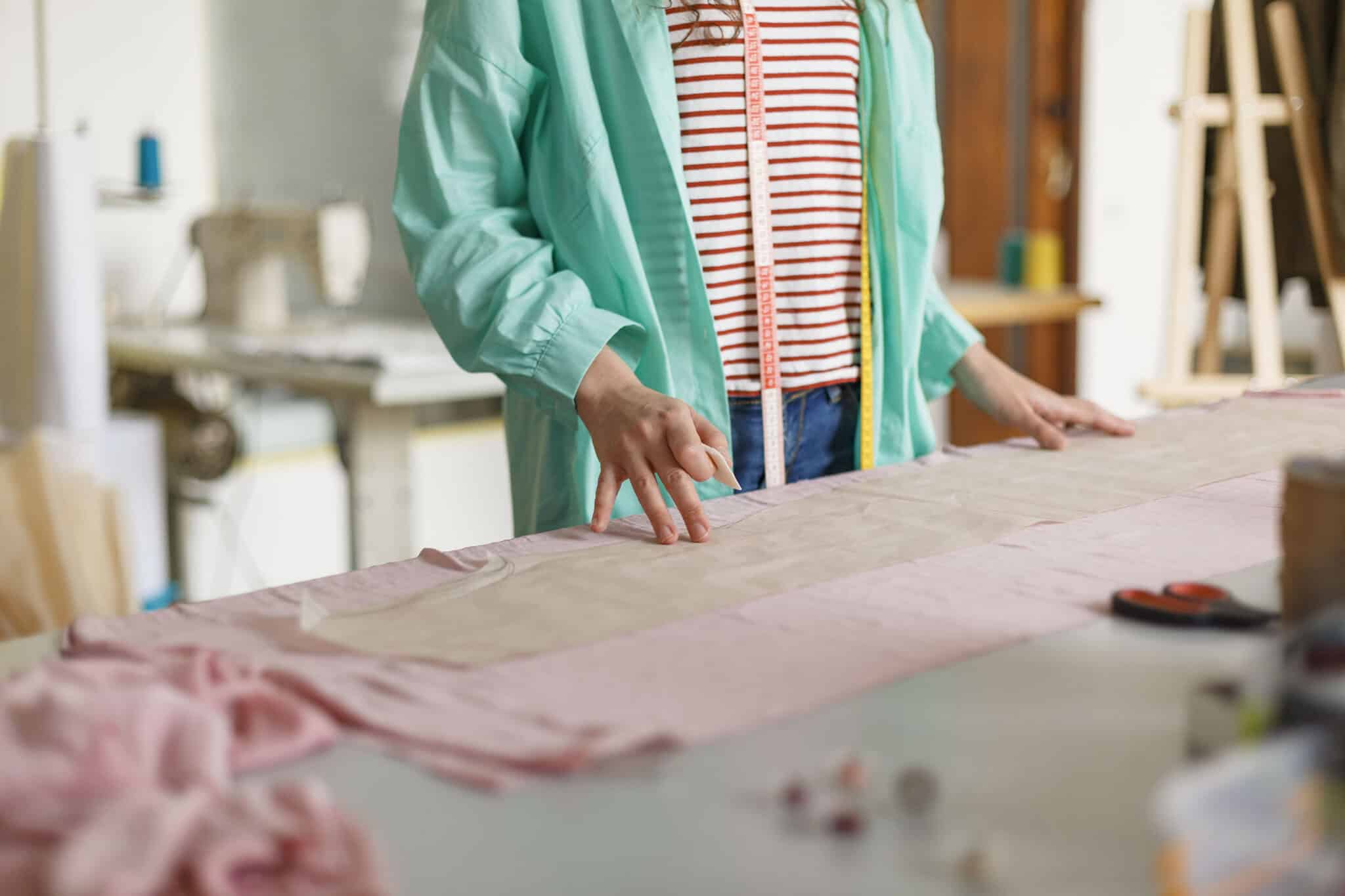
Before bulk starts, the production team reviews the approved pre-production (PP) sample, the buyer’s comments and the final measurement chart. Patterns are graded for all sizes, and the first pieces cut from bulk fabric are checked against the pattern. If you are not sure what a PP sample is, our guide to apparel sampling stages explains each sample type.
3. Inline quality control during sewing
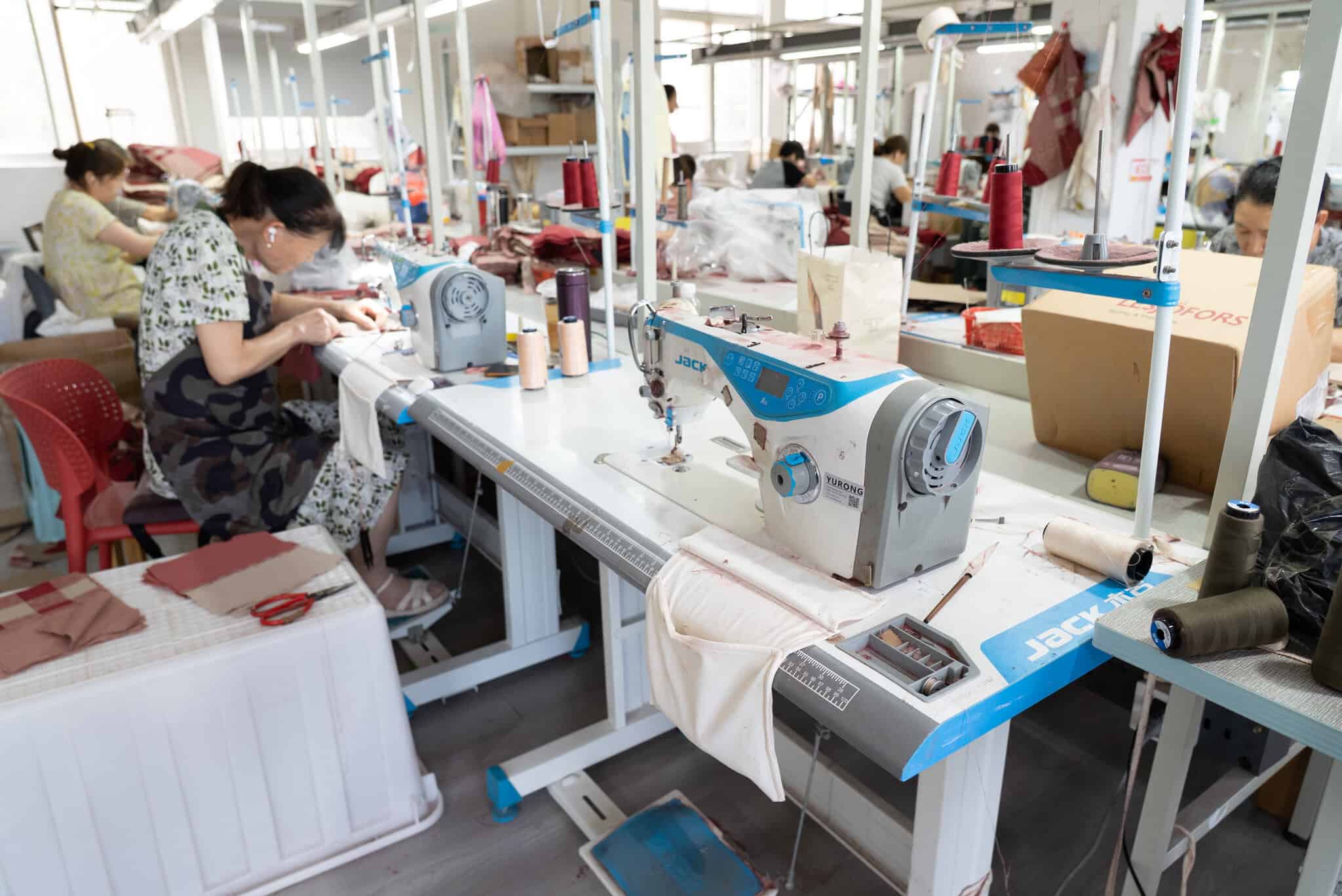
Inline QC means random checks on semi-finished garments while they are still on the sewing line — for example after sleeves are attached or zippers are installed. Our inline checks look for loose threads, open seams, incorrect stitch density, asymmetry and measurement drift. Problems found inline are corrected at the operation that caused them, before hundreds of pieces repeat the same mistake.
4. Final inspection with AQL sampling
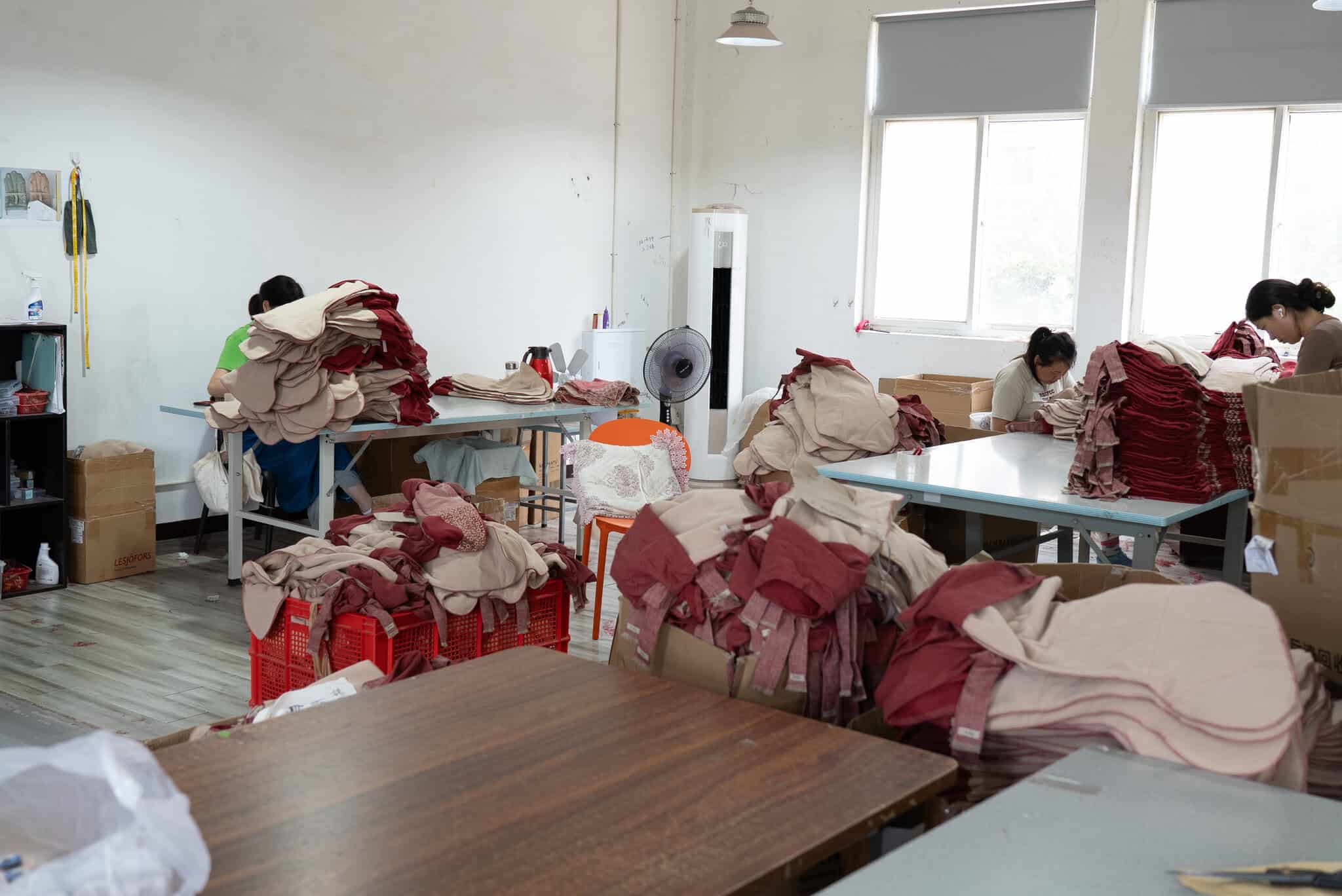
Once garments are finished, pressed and mostly packed, the final inspection takes a random sample from the lot and checks it against the approved sample and specification. This is where AQL comes in.
What does AQL 2.5 mean?
AQL stands for Acceptance Quality Limit. It comes from the international sampling standard ISO 2859-1 (equivalent to ANSI/ASQ Z1.4). Instead of checking every piece, the inspector checks a statistically defined sample and counts defects. AQL 2.5 is the most common level for major defects in apparel.
Defects are usually classified into three groups:
- Critical — could harm the user or breaks a legal requirement, for example a broken needle in a garment or a loose small part on babywear. Normally zero are accepted.
- Major — likely to cause a customer return: open seams, wrong measurements outside tolerance, visible stains, wrong colour. Typically inspected at AQL 2.5.
- Minor — small cosmetic issues that are unlikely to cause a return, such as a short untrimmed thread. Often inspected at AQL 4.0.
How many pieces are checked?
The sample size depends on the lot size. Using general inspection level II, the most common setting:
| Lot size (pieces) | Sample size | Major, AQL 2.5 accept / reject | Minor, AQL 4.0 accept / reject |
|---|---|---|---|
| 501 – 1,200 | 80 | 5 / 6 | 7 / 8 |
| 1,201 – 3,200 | 125 | 7 / 8 | 10 / 11 |
| 3,201 – 10,000 | 200 | 10 / 11 | 14 / 15 |
For example, for an order of 2,000 sweatshirts the inspector randomly selects 125 pieces. If 7 or fewer have major defects, the lot passes for major defects; if 8 or more do, the lot fails and is reworked and re-inspected.
What is checked in a final inspection?
- Workmanship: seams, stitching, symmetry, pressing, cleanliness
- Measurements against the size chart and agreed tolerances
- Colour and material compared with the approved sample
- Function: zippers, snaps, drawcords, buttons
- Labels, hangtags, barcodes and care instructions
- Packing: folding, polybags, carton marks and size/colour assortment
Pre-shipment inspection by the buyer or a third party
Many of our customers book their own inspector or a third-party company to carry out a pre-shipment inspection (PSI) before goods are released. We welcome this: the inspector uses the same AQL tables, and the result gives both sides a clear, documented decision before the container is loaded.
Extra checks for babywear and kidswear
Products for babies and children need additional safety attention. Depending on the market, buyers commonly require compliance with standards such as EN 71 for toys, EN 1130 for cribs and cradles, and EN 14682 for cords and drawstrings on children’s clothing. Small parts, snap strength and sharp edges are treated as critical defects. Our baby products are produced with this EU and US compliance focus in mind.
Questions to ask any garment factory about QC
- Who inspects incoming fabric, and what tests are done?
- Is there inline QC on every sewing line, or only a final check?
- What AQL levels are used for critical, major and minor defects?
- What measurement tolerances will be applied?
- Can I see a sample inspection report?
- Will you accept a third-party pre-shipment inspection?
For more on choosing a supplier, see How to Source a Reliable Apparel Factory in China.
Work with a factory that takes QC seriously
With over 15 years of export experience and our own factory in Zhenjiang, YuRong manufactures apparel, baby products and pet products for brands in Europe and the US — with fabric checks, inline QC and AQL 2.5 final inspection on every order. Contact us to discuss your next project or to request a sample inspection report.