Whether you are launching a new clothing brand or adding a product line, garment development is the stage that decides cost, quality and lead time for everything that follows. Here is how the development process works with an OEM/ODM manufacturer in China, based on how our team at ZHENJIANG YURONG IMP&EXP CO LTD works with brands in Europe and the US.
OEM or ODM — which do you need?
- OEM — you supply the design (tech pack, sketches or a reference sample) and we manufacture it to your specification, with your labels and packaging.
- ODM — we propose or adapt designs, fabrics and constructions from our experience, and you customise colours, branding and details.
Many projects are a mix: the buyer has a clear idea, and our team fills in the technical details.
Step 1: Design brief and target
Development starts with understanding the product and the market: who wears it, where it is sold, target retail price, expected quantities and delivery date. A hoodie for a European kidswear brand and a technical rain jacket for outdoor use need very different fabrics, trims and testing — so the brief guides every later decision.
Step 2: Tech pack and technical drawings
A tech pack is the garment’s instruction manual. A useful tech pack contains:
- Flat sketches with construction details and stitch types
- A measurement chart with points of measure and tolerances
- Bill of materials: fabric, lining, interlining, thread, zippers, buttons, labels
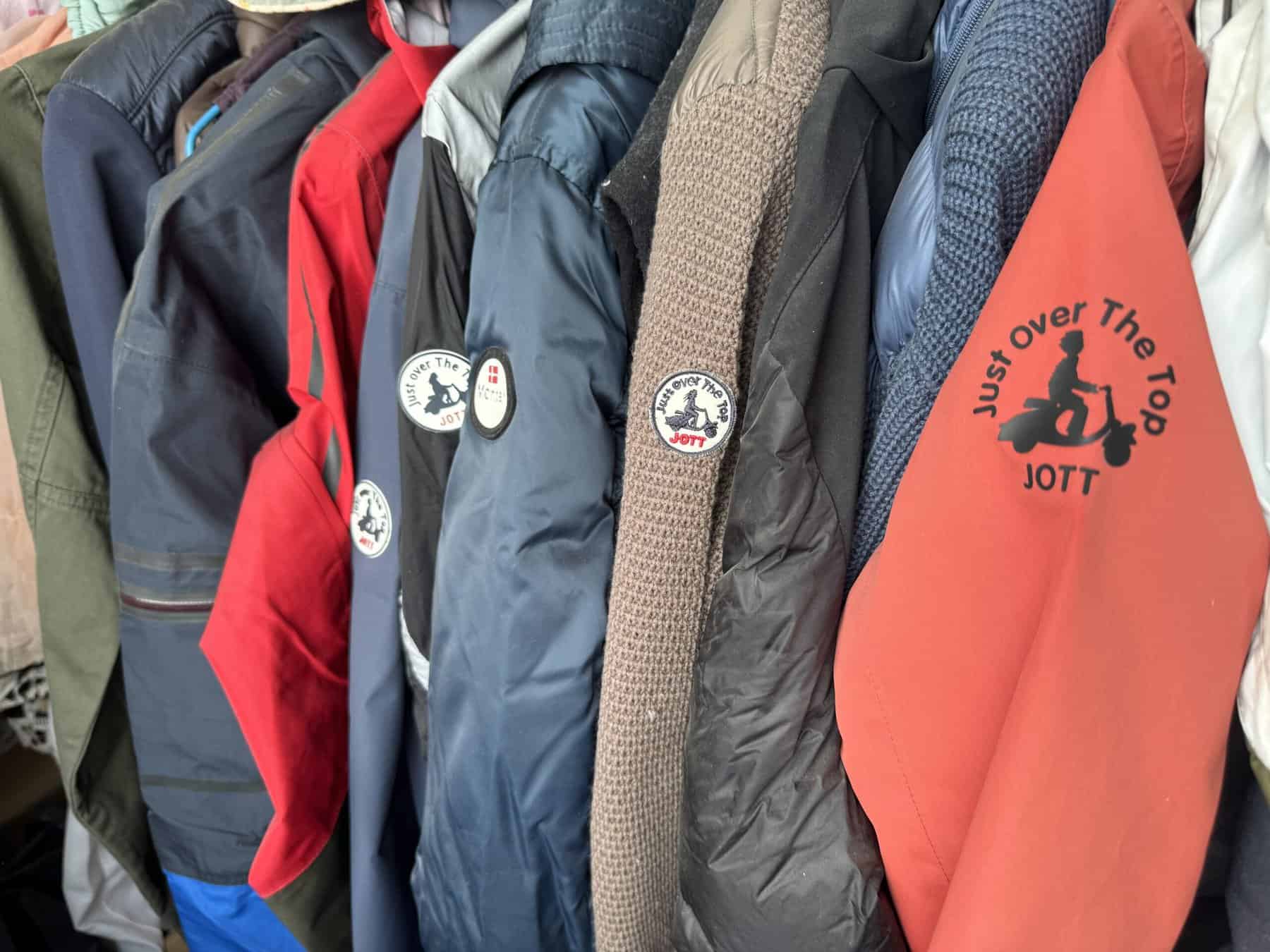
- Artwork placement for prints, embroidery and logos
- Colourways, packaging and labelling instructions
If you only have sketches or photos, our team will discuss your concept, recommend suitable fabrics and finishes, and create detailed technical drawings and packs to bring your design to life.
Step 3: Fabric and trim sourcing
Fabric decides how a garment looks, feels, washes and costs. Our sourcing team works with China’s large fabric and trim markets to find options that match your brief — cotton, linen, wool, polyester, nylon, blends, recycled or specialty fabrics — and we can develop custom fabrications, dyes and trims, with MOQs depending on the material. Approve fabric and colour (lab dips) early: fabric is usually the longest lead-time item.
Step 4: Pattern making and sampling
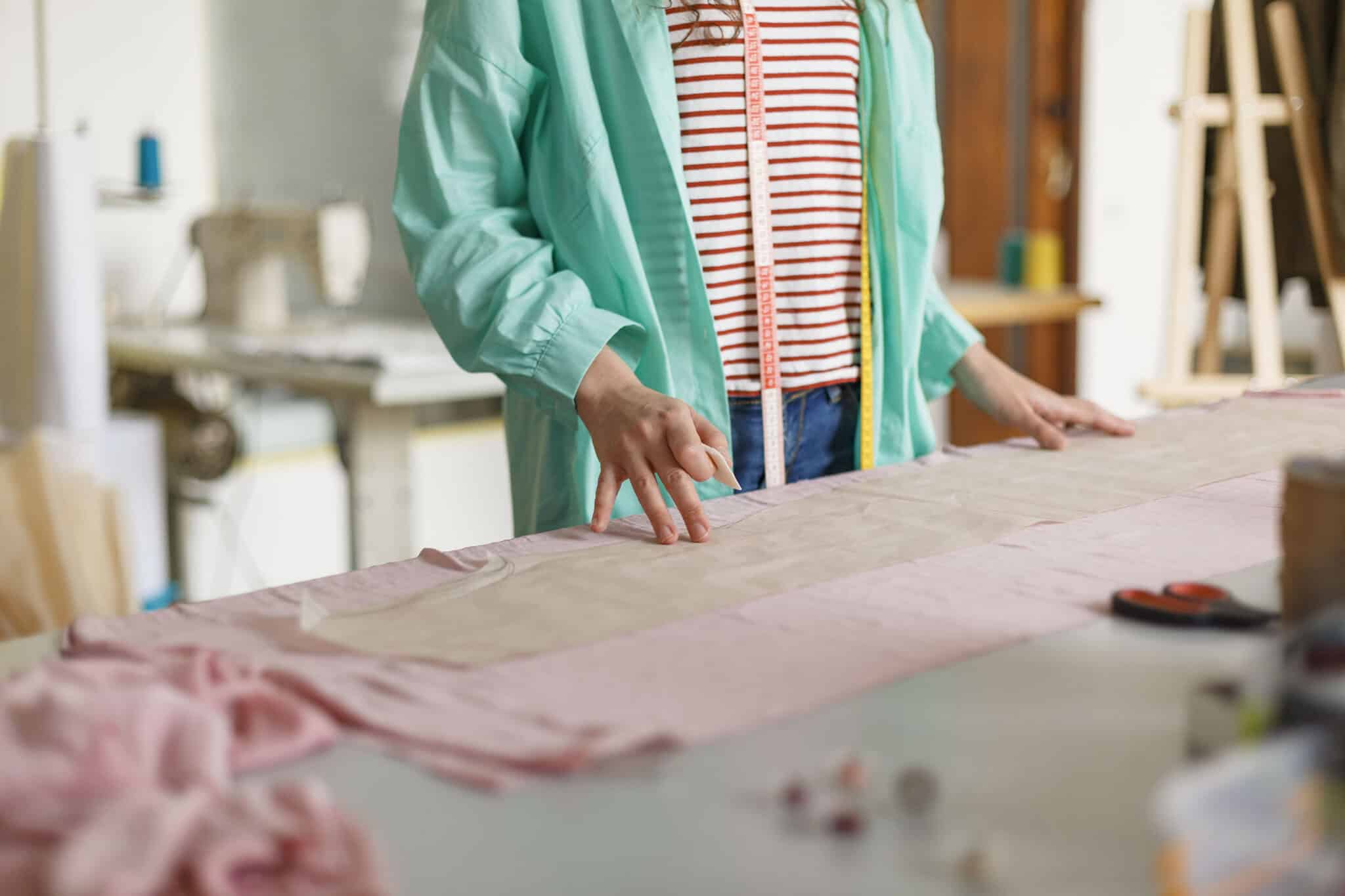
Our senior pattern makers build the pattern from your measurements or from a reference garment, and the first sample is sewn. Comments are made, the pattern is adjusted, and the sample is refined through fit and pre-production stages. Our guide to apparel sampling stages explains proto, fit, size set, SMS, PP and TOP samples in detail. Typical sampling time is 3–7 days once materials are ready.
Step 5: Costing and order confirmation
With fabric, trims and construction confirmed, the garment can be costed accurately. The price depends mainly on fabric consumption and price, trims, labour minutes for the construction, decoration (print, embroidery), packaging and order quantity. Our standard MOQ is typically 500 pieces per style, and we are flexible for smaller batches — ask us about your quantities.
Step 6: Bulk production
After pre-production sample approval and order confirmation, bulk materials are purchased and checked, and production follows a clear sequence:
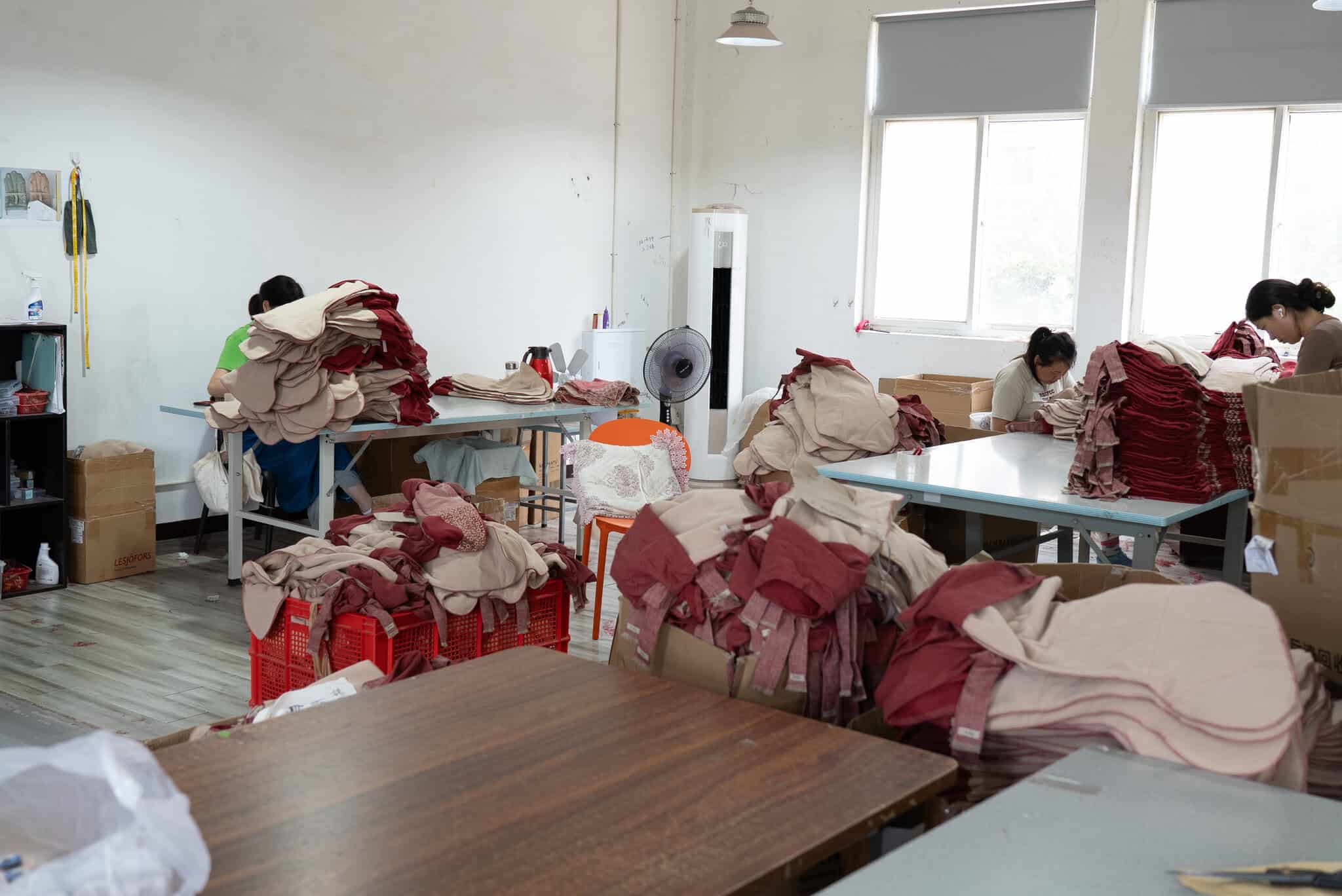
- Fabric inspection, pattern grading, cutting and bundling by size and colour
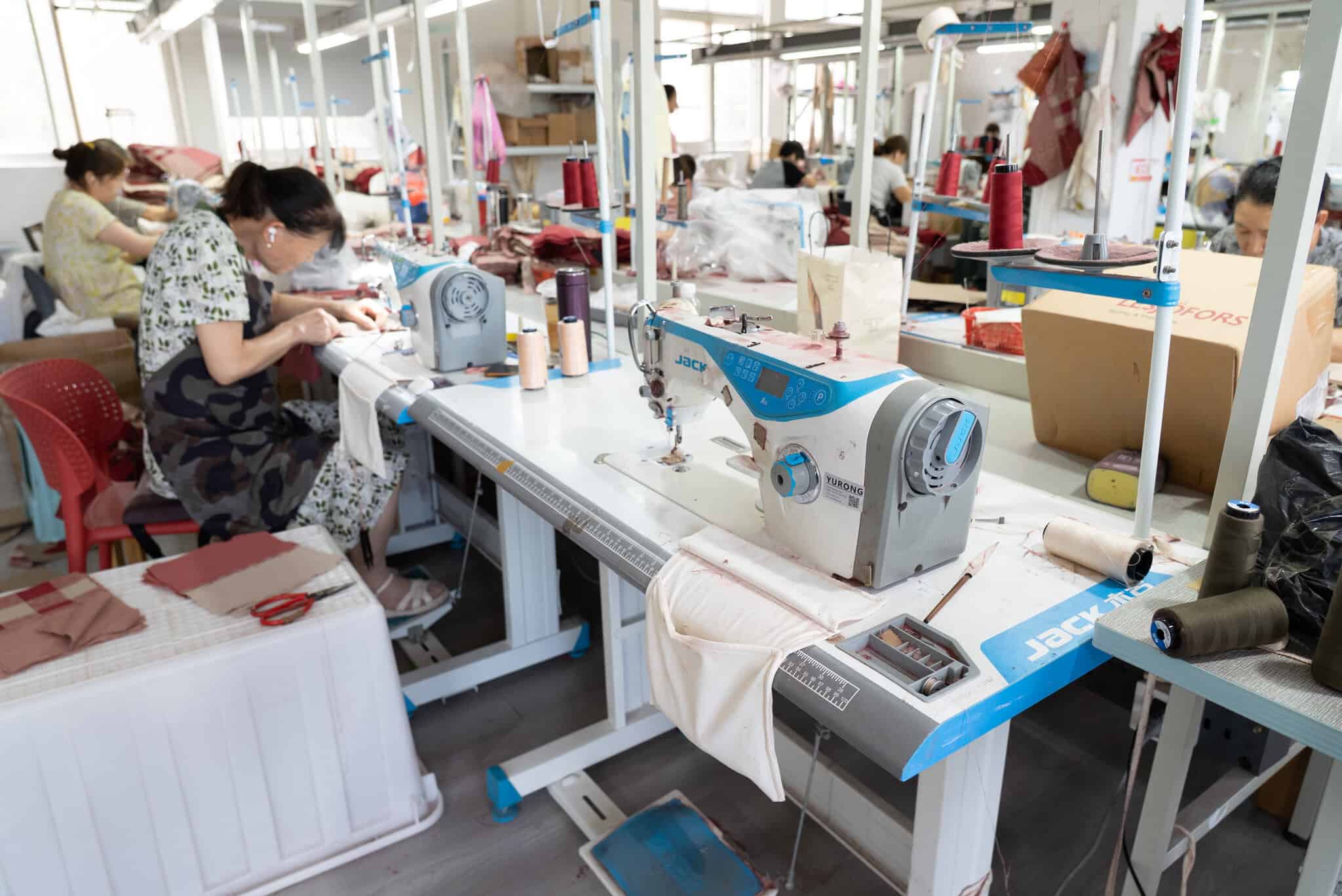
- Sewing and assembly on production lines, with inline QC
- Finishing: pressing, trimming and final quality inspection (AQL 2.5)
- Packing according to your labelling and assortment requirements
- Pre-shipment inspection by you or a third party, then shipping
Bulk lead time is usually around 30–45 days after production confirmation, depending on quantity and complexity. Read how each quality checkpoint works in Garment Quality Control in China: How AQL 2.5 Inspection Works.
Step 7: Re-orders and continuous improvement
Once a style is approved, re-orders are faster: patterns, materials and quality standards are already in place. We keep records of approved samples and production details so that every re-order matches the first.
What we develop
- Apparel — hoodies, sweatshirts, pullovers, knitwear, shirts, joggers, sportswear, waterproof seam-taped jackets and down jackets
- Baby & kids — bodysuits, rompers, sleeping bags, baby hammocks, cradles, carriers and weighted blankets
- Pet products — pet clothes, raincoats, sweaters, beds, mats and soft accessories
Start your development project
With more than 15 years of experience, our own factory and a skilled team of 50+ workers, YuRong supports you from the first sketch to the last carton. Whether you have a complete tech pack or just a rough idea, tell us about your project — we typically reply within 24 hours.